



Copyright © 2025 Shenyang Dasan Pharmaceutical Technology Co., Ltd.

 Posting Date:2021-11-26
 Views:
 More than half of American adults are carriers of HSV1 (herpes simplex virus type 1), which lies dormant in the peripheral nervous system and can never be eradicated. Some carriers never even experience the cold sores for which HSV1 is known. But for others, it can cause blindness or life-threatening encephalitis. And growing evidence suggests it contributes to dementia.
HSV2, a close relative of HSV1, is more commonly transmitted sexually and can be passed from mother to newborn as neonatal herpes during childbirth. Neonatal herpes manifests as lesions all over the infant's body. Most babies recover, but in the worst cases, it can cause brain damage or spread to all organs and lead to death.
In a new study, researchers from Northwestern University Feinberg School of Medicine have uncovered the cunning strategy HSV1 uses to infect the nervous system, opening the door to a long-sought vaccine for both HSV1 and HSV2. The findings were published online in Nature on November 17, 2021, under the title “Herpesviruses assimilate kinesin to produce motorized viral particles”.
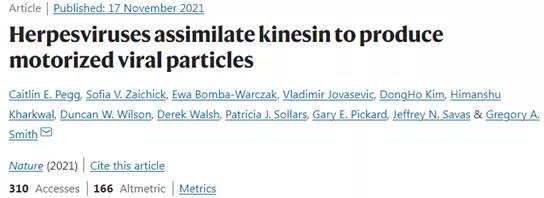
This new study charts a path toward vaccine development. It reveals how the herpes virus hijacks a protein from epithelial cells and turns it into a “traitor” to help the virus enter the peripheral nervous system. The researchers call this process “assimilation.”
Hitchhiking
Like many viruses, herpes viruses travel along train tracks inside cells called microtubules, using protein engines called dynein and kinesin to move along the tracks. Smith and his team discovered that the herpes virus uses kinesin engines it brings from other cells to transport itself to the neuron's nucleus. Kinesin becomes a traitor, working for the herpes virus.
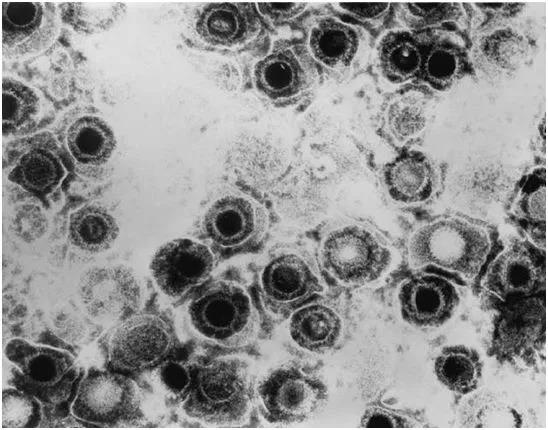
Herpes virus goes on a cross-country journey
Think of the host cell as a railway station. All tracks lead to a hub called the centrosome. There are two types of train engines: dynein and kinesin. One type of engine travels toward the centrosome—think downtown—while the other travels away from the centrosome to the suburbs.
When a more typical virus, like the flu virus, infects a mucosal epithelial cell (the cells that line your nose and mouth), it grabs both engines and moves back and forth along the microtubule bundles until it eventually, more or less by chance, reaches the nucleus. All in all, it's a short commute from the suburbs to the nucleus via the centrosome.
But traveling along a nerve is the equivalent of a cross-country journey. On this trip, the herpes virus hops on the dynein engine, but it also makes sure the kinesin engine doesn't bring it back the way it came.
However, dynein can't take it beyond the centrosome. And the herpes virus needs to reach the nucleus. That's when it reaches into its pocket, pulls out the kinesin engine it hijacked from the mucosal epithelial cell, and persuades kinesin to become part of its team. In an act of betrayal, the kinesin assimilated by the herpes virus transports it directly to the nucleus.
``` Previous:
 Back to List