



Copyright © 2025 Shenyang Dasan Pharmaceutical Technology Co., Ltd.

 Posting Date:2021-11-19
 Views:

Recent studies have found that sialic acid-binding immunoglobulin-like lectin-15 (Siglec-15) may serve as a key immune checkpoint in tumors, thereby enhancing the expression and function of programmed death ligands. In a study published in the British Journal of Haematology titled "Sialic acid‐binding immunoglobulin‐like lectin (Siglec)‐15 is a rapidly internalised cell‐surface antigen expressed by acute myeloid leukaemia cells," scientists from the University of Aberdeen and other institutions have identified a novel targeted therapy with the potential to treat acute myeloid leukemia (AML).
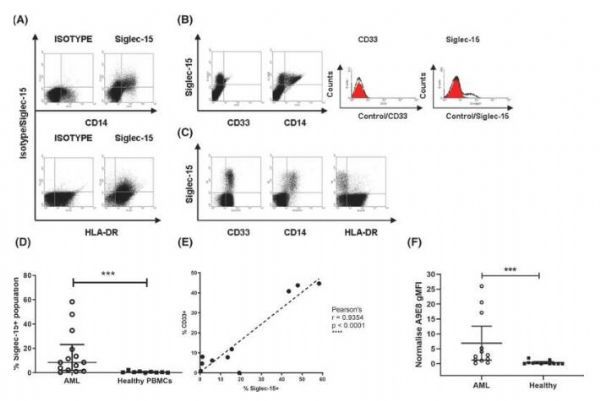
High expression of sialic acid-binding immunoglobulin-like lectin (Siglec)-15 on the surface of circulating blood cells in patients with acute myeloid leukemia (AML)
Source: DOI:10.1111/bjh.17496
This innovative "magic bullet" technology uses targeted antibody techniques, reducing the need for current treatments, which are often arduous, invasive, and require prolonged hospitalization. Acute myeloid leukemia typically affects older adults, with approximately 3,000 people diagnosed each year in the UK alone. Current treatments mainly involve bone marrow transplantation, which can be extremely painful for patients and sometimes causes uncomfortable side effects.
The researchers found high concentrations of a molecule called Siglec-15 on the surface of diseased cells in AML patients. They also identified a molecule that binds to Siglec-15, enters the cell, and delivers a toxin that can kill the diseased cells, thereby eradicating the disease without damaging healthy cells. Researcher Cao explained that they are seeking new approaches to treat leukemia using targeted antibody therapy, known as the "magic bullet." To achieve this, they need to identify a cancer-specific target and develop an antibody against it.
In AML patients, Siglec-15 expression levels are higher than in healthy cells, prompting the researchers to exploit this overexpression. By identifying a molecule that binds to Siglec-15, they unlocked its potential to carry toxins into the cells, ultimately destroying the diseased cells. In this way, the researchers suggest that anti-Siglec-15 could serve as a "magic bullet," delivering toxins to diseased cells to effectively treat AML. Although this "magic bullet" approach has already been used for certain types of cancer, this study marks the first time the technology has been applied to AML treatment.
The researchers noted that AML is a major cause of death, particularly among the elderly. The "magic bullet" therapy developed in this study offers an effective treatment for AML patients with fewer side effects, making it potentially beneficial for vulnerable patient populations. Although the research is still in the experimental stage, if all goes well, the therapy could be used clinically to treat AML patients within three to five years. In summary, the study findings suggest that targeting Siglec-15 may offer significant therapeutic advantages, and antibodies against Siglec-15 hold promise as a novel treatment for AML patients in the future.
 Previous:
 Back to List