以下是保留原 HTML 结构的翻译结果:
---
```html
The COVID-19 pandemic continues to spread globally, but no specific therapeutic drugs are yet available. The discovery and validation of new targets are of great significance for the development of anti-SARS-CoV-2 drugs.
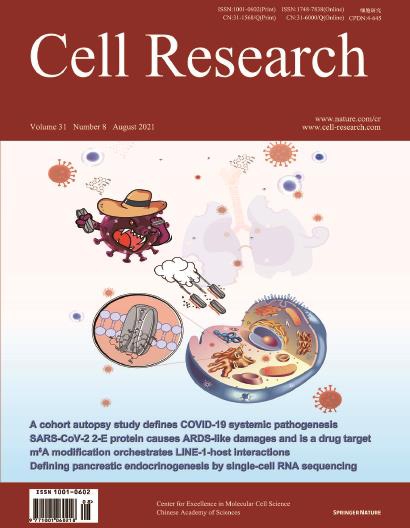
Recently, a collaborative research team led by Gao Zhaobing, Li Jia, and Shen Jingshan from the Shanghai Institute of Materia Medica of the Chinese Academy of Sciences, along with Zhang Leike from the Wuhan Institute of Virology and Zheng Yongtang from the Kunming Institute of Zoology, published a paper in Cell Research reporting a potential drug target against SARS-CoV-2—the SARS-CoV-2 envelope protein (2-E) channel.
The study first demonstrated that the SARS-CoV-2 envelope protein can form an acid-sensitive cation channel, and experiments showed that this channel alone can induce cell death, promote the release of inflammatory cytokines, and cause acute respiratory distress syndrome (ARDS)-like injury in mice. The research team then conducted activity screening and structural optimization, identifying several small-molecule channel inhibitors that exhibited both preventive and therapeutic effects in animal models.
The envelope protein (E) of SARS-CoV-2 is the smallest of the virus's four structural proteins, consisting of approximately 75 amino acids. Its protein nature and physiological and pathological functions remain unclear. Studies on the E protein of other coronaviruses have shown that this class of proteins possesses ion channel activity, but reports on its use as a therapeutic target are limited.
In this study, the research team led by Gao Zhaobing and their collaborators confirmed for the first time that the envelope protein 2-E forms a novel cation channel that induces host cell death and inflammatory storms in vivo. The 2-E channel is involved in SARS-CoV-2 viral replication. Inhibitors of the 2-E channel demonstrated preventive and therapeutic effects against SARS-CoV-2 infection in animal models.
This work provides a potential new target for the development of anti-SARS-CoV-2 drugs and identifies promising candidate compounds for novel anti-COVID-19 therapies. The study also suggests that targeting ion channels holds significant value for the development of drugs against emerging viral infections, including COVID-19.




 Posting Date:2021-09-16
 Views:
  Previous:
 Back to List