How to Quickly Relieve Nasal Congestion During the Autumn-Winter Transition?
Posting Date:2024-11-28Views:
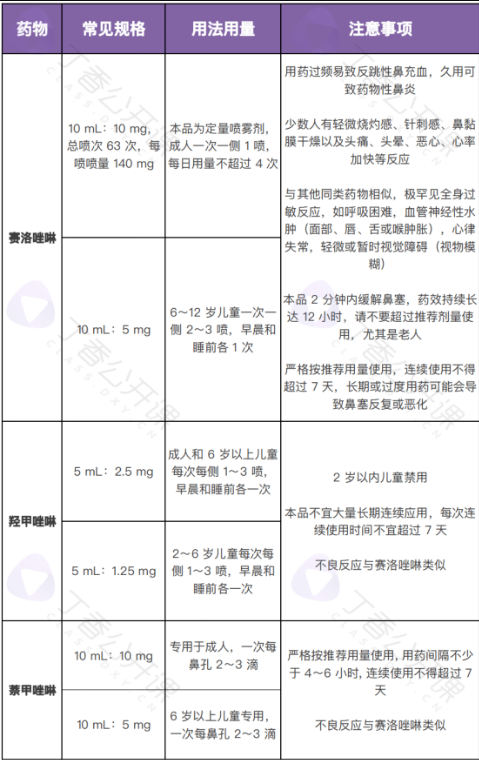
Nasal congestion, a common clinical symptom, often causes discomfort and distress. To quickly restore nasal patency, topical nasal decongestants are often the first choice for many patients. Among the three commonly used nasal decongestants—xylometazoline, oxymetazoline, and naphazoline—which offers better efficacy and safety?All three are effective in relieving severe nasal congestion. Whether used alone or in combination with intranasal corticosteroids or antihistamines, they significantly improve symptoms within a short time. However, continuous use should be limited, generally not exceeding two weeks, to avoid dependency or other adverse reactions. Additionally, for patients with allergic rhinitis, these drugs can serve as second-line treatment options.- Indications -① Severe nasal congestion. May be used alone or in combination with intranasal corticosteroids or antihistamines. Continuous use should not exceed two weeks. Nasal decongestants are second-line agents for allergic rhinitis.② Before nasal endoscopic examination and surgery.③ Eustachian tube obstruction and otitis media with effusion caused by nasal inflammatory diseases.④ Epistaxis from various causes, to achieve hemostasis.Beyond severe nasal congestion, these drugs are also indicated before nasal endoscopic examination and surgery, as well as for Eustachian tube obstruction and otitis media with effusion caused by nasal inflammatory diseases. They also effectively control bleeding in epistaxis from various causes.Regarding safety, the severity of adverse reactions differs among the three. According to clinical data, xylometazoline has relatively minor adverse reactions, followed by oxymetazoline, while naphazoline has comparatively greater adverse reactions. Furthermore, the toxic dose of xylometazoline is significantly higher than that of oxymetazoline and naphazoline, indicating a higher safety margin for xylometazoline.When using these medications, certain precautions should be observed. For instance, if the nasal spray drips into the oropharynx, it should be spit out rather than swallowed to minimize adverse effects. Additionally, these drugs are not suitable for everyone. They are contraindicated in patients with atrophic rhinitis, dry rhinitis, hypertensive crisis, severe organic heart disease (e.g., coronary artery disease), diabetic crisis, severe hyperthyroidism, acute digitalis toxicity, cardiac asthma, closed-angle glaucoma, as well as those undergoing treatment with monoamine oxidase inhibitors or tricyclic antidepressants. Their use is generally not recommended during pregnancy or in children under 3 years of age.When choosing among xylometazoline, oxymetazoline, or naphazoline, the indications, safety profile, and the patient's specific condition must be considered. For patients with milder symptoms or higher sensitivity, xylometazoline may be the better choice due to its lower risk of adverse reactions and wider safety margin. For those with more severe symptoms requiring rapid relief, the selection should be made under medical guidance, weighing the benefits and risks based on the individual situation. In any case, standardized and rational use is essential to ensure both efficacy and safety.




 Posting Date:2024-11-28
 Views:
 Previous:
 Back to List