



Copyright © 2025 Shenyang Dasan Pharmaceutical Technology Co., Ltd.

 Posting Date:2022-06-10
 Views:
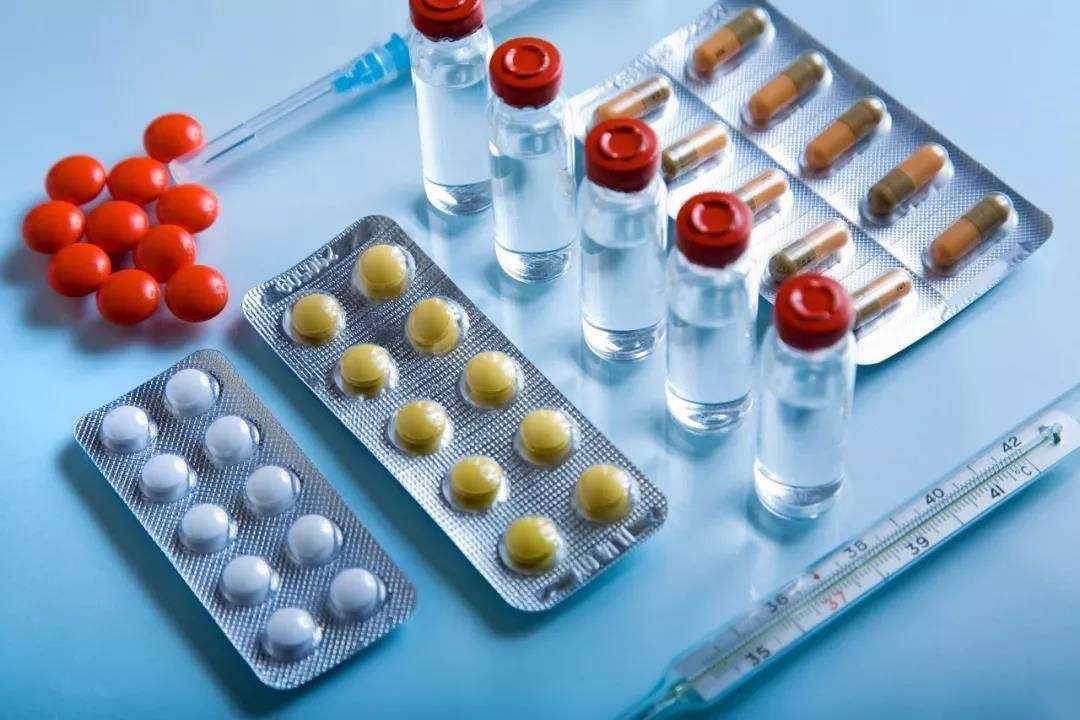
On May 26, Legend Biotech's CAR-T immunotherapy drug, Ciltacabtagene Autoleucel, was granted conditional marketing authorization in the European Union, following its launch in the United States. Just two days prior, the U.S. Food and Drug Administration (FDA) formally approved Tapinarof cream, developed by Dermavant Sciences. Tapinarof, known as benvitimod in Chinese, was approved for marketing in China in 2019, with the marketing authorization holder being Guangdong Sinova Biopharmaceutical Co., Ltd., a subsidiary of Guanhao Biotech. In 2018, Dermavant Sciences acquired the rights to develop the product outside Greater China.
These are examples of China's innovative drugs going global. Based on public information, in recent years, Chinese innovative drug companies have been continuously increasing efforts in differentiated R&D, exploring overseas markets, and reasonably controlling costs, actively seeking opportunities for stable future growth.
Differentiated Innovation Rejects "Involution"
On June 7, the Center for Drug Evaluation of the National Medical Products Administration (NMPA) released the "Annual Report on Progress of New Drug Registration Clinical Trials in China (2021)." The report indicates that whether measured by drug variety or number of registered clinical trials, PD-1, PD-L1, HER2, and EGFR are all popular targets, and the indications for drugs targeting these four areas are all focused on oncology. China's new drug development is characterized by a state of "high-level duplication."
R&D "involution" has led to intensified competition and significantly reduced market returns. Taking the PD-1 antibody drug camrelizumab for injection as an example, the winning bid price for national reimbursement listing negotiations was approximately 19,800 yuan per vial in 2020. In 2021, with the approval of other PD-1 antibody drugs such as zimberelimab and penpulimab, and influenced by factors like the national reimbursement listing negotiations, the winning bid price dropped to 2,928 yuan per vial, a decrease of over 85%.
Perhaps precisely for this reason, some innovative drug companies have proactively withdrawn from development paths plagued by severe homogeneity. In March 2021, Bio-Thera Solutions announced the termination of Phase II clinical development of its PD-1 monoclonal antibody BAT1306, citing increasingly fierce competition in the PD-1 antibody drug market, which escalated R&D costs and commercialization risks.
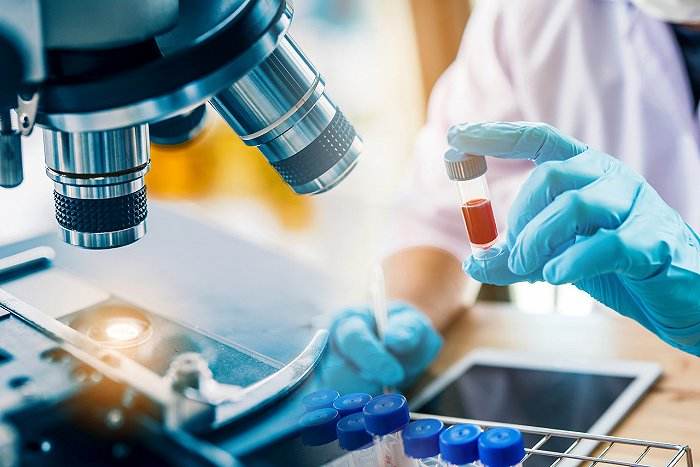
Concurrently, some innovative drug companies are opting for differentiated innovation strategies. Selecting new targets or new indications is one way to achieve this. Based on public information from listed companies, BeiGene, Hengrui Medicine, and Junshi Biosciences are all focusing on researching new targets as part of their drug development priorities. BeiGene's 2021 annual report shows favorable progress in clinical trials for drugs targeting new targets such as TIGIT and OX40. According to the PharmSnap database, as of May 25, only 47 and 35 TIGIT and OX40 related drugs have been approved globally, with only 81 and 12 clinical trials for TIGIT and OX40 related drugs in China, respectively.
Improved administration methods and enhanced therapeutic outcomes are also differentiation breakthrough points chosen by innovative drug companies. At the end of November 2021, the world's first subcutaneously injectable PD-L1 antibody drug, envafolimab injection, developed by Alphamab Oncology, 3D Medicines, and Simcere Pharmaceutical, was successfully approved for marketing. Benefiting from its nano-formulation, the drug reduces administration time from the traditional 0.5-2 hours for intravenous injection to within 30 seconds.
Innovative Drugs "Going Global" Becoming a Trend
Bringing formulation products to international markets is one of the strategic goals of Chinese pharmaceutical companies pursuing "internationalization." With rapid industry development and policy impetus, the trend of innovative drugs "going global" is gaining momentum.
In addition to successful international entries such as Legend Biotech's Ciltacabtagene Autoleucel, BeiGene's zanubrutinib, and CSPC Pharmaceutical Group's levamlodipine maleate tablets, according to analysis by KPMG China, domestic innovative drugs like Kintor Pharmaceutical's proxalutamide, Frontier Biotech's albuvirtide, and Chipscreen Biosciences' chidamide have also been launched in various overseas markets. Public information reveals that BeiGene's domestic revenue for 2021 was 3.336 billion yuan, while its overseas revenue reached 4.253 billion yuan, with the overseas market contributing more to performance than the domestic market. The company's first-quarter report this year shows that product revenue for zanubrutinib capsules in the US was 431 million yuan, an increase of 5.53 times compared to the same period in 2021.
Meanwhile, other innovative drug companies are submitting new drug applications to regulatory authorities in different countries and regions. For instance, Luye Pharma submitted a new drug application for ansufaxine hydrochloride to the US FDA; Yifan Pharmaceutical's efbemalenograstim alfa injection was submitted for new drug applications to both the US FDA and the European Medicines Agency.
As innovative drug products increasingly "go global," the "volume" and "value" of innovative drug patent out-licensing have also seen significant growth over the past five years. According to data compiled by Southwest Securities, the number of out-licensing projects increased progressively from 5 in 2017 to 51 in 2021. Notably, in June 2021, RemeGen out-licensed the rights for development and commercialization of disitamab vedotin in most overseas markets to Seagen. The total potential revenue for RemeGen from this deal reached up to US$2.6 billion, setting a record for the transaction value of a drug out-licensing deal in China.
Reasonable Cost Control Enhances Competitiveness
High investment and high risk are defining characteristics of new drug R&D. In January, Deloitte's "2021 Measuring the Return from Pharmaceutical Innovation" report indicated that the average cost of R&D for a new drug for large pharmaceutical companies in 2021 was US$2.006 billion. Reducing production costs and balancing various expenses is also a crucial way for innovative drug companies to achieve reasonable returns in fierce competition.
Many innovative drug companies are opting to achieve cost reduction and efficiency gains by expanding production scale. According to the Wind database, the median ending balance of construction in progress for listed innovative drug companies in 2021 was 807 million yuan, an increase of 44.49% compared to the same period in 2020. Among them, several innovative drug companies like Fosun Pharma, Hengrui Medicine, and Walvax Biotech reported ending balances of construction in progress exceeding 1 billion yuan. Taking Hengrui Medicine as an example, its over 30 construction projects in 2021 involved pharmaceutical industrial parks, formulation manufacturing plants, and R&D centers. The company's 2021 annual report indicated that the gradual completion of these projects would help release production capacity and reduce costs.
In addition to controlling costs, balancing the "four major expenses" (R&D expenses, sales expenses, administrative expenses, financial expenses) according to specific circumstances is also crucial. The business strategies of innovative drug companies vary depending on their development stage. Companies with stronger commercialization capabilities often choose to control sales expenses. For example, Hualan Biological's sales expenses decreased by 27.93% in 2021, with the most significant declines in service fees and conference fees. For companies that have just started commercialization, increasing academic promotion and sales personnel is often a necessary choice. For instance, SinoCelltech, which entered its "first year" of commercialization in 2021, saw its sales expenses increase by 6.33 times compared to 2020, with labor costs accounting for nearly 60% of sales expenses. The company's 2021 annual report shows that to transform from a pure R&D-focused enterprise to a commercial one, its sales team grew from 29 to 204 people.
Of course, amidst the fluctuations and adjustments in the innovative drug capital market, Chinese innovative drug companies still face multiple challenges, including a weak foundation in basic research for first-in-class targets and mechanisms, increasingly cautious investment attitudes, and tight operating cash flow. These factors also impose higher demands on the R&D capabilities, operational management, and commercialization proficiency of listed innovative drug companies.
 Previous:
 Back to List