



Copyright © 2025 Shenyang Dasan Pharmaceutical Technology Co., Ltd.

 Posting Date:2022-03-25
 Views:
 Recently, the National Cancer Center released the latest China cancer report.
It is understood that the National Cancer Registration Center is responsible for the collection, quality control, aggregation, and analysis of national cancer registry data. The data released in this report comprises registration information from national cancer registries aggregated for the year 2016. The study, based on the latest data from the National Cancer Center, selected 487 high-quality monitoring sites from 682 cancer monitoring points nationwide, covering a population of 380 million, and provides a detailed description of China's cancer burden in 2016.
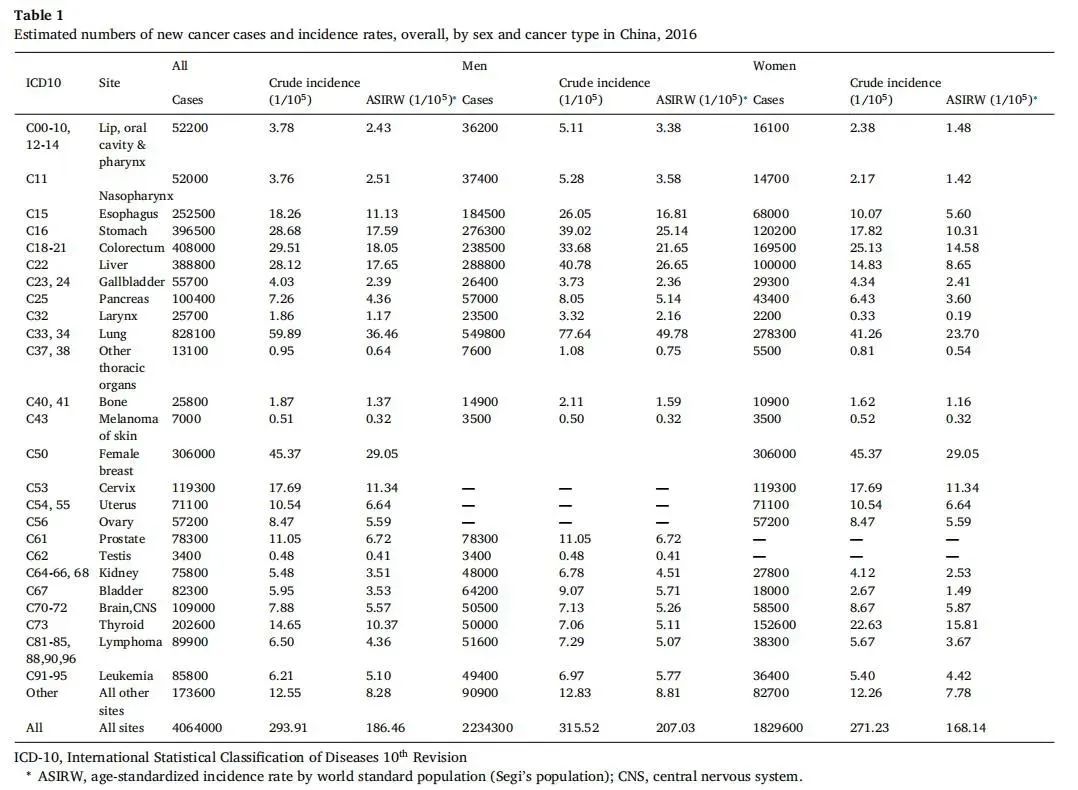
The report shows that on average, over 11,100 people are diagnosed with new cancer cases daily in China, and nearly 6,600 people die from cancer each day. Lung cancer, colorectal cancer, gastric cancer, liver cancer, and female breast cancer are the five most common cancers, accounting for 57.4% of all new cancer cases.
Basic Overview
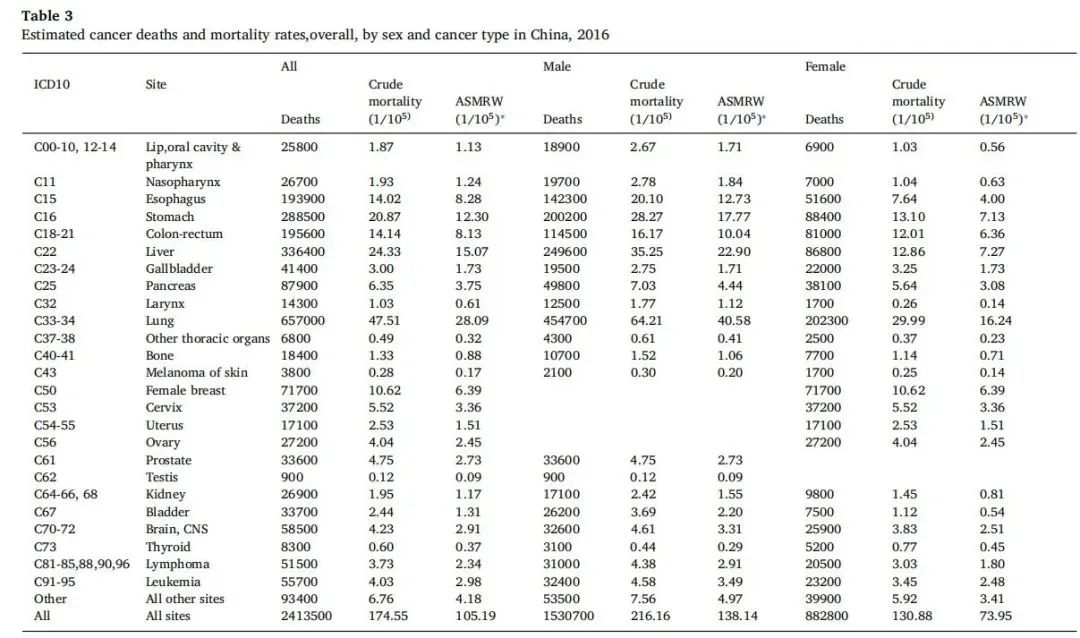
In 2016, approximately 4.064 million new cancer cases and 2.4135 million cancer deaths were reported in China.
From the perspective of cancer incidence, lung cancer, colorectal cancer, gastric cancer, liver cancer, and female breast cancer are the five main malignant tumors in China, accounting for 57.4% of all new cases. Lung cancer, liver cancer, gastric cancer, colorectal cancer, and esophageal cancer are the top five malignant tumors by mortality, accounting for 69.3% of all deaths.
Notably, lung cancer ranks first in both incidence and mortality.
In terms of gender differences:
Regarding cancer incidence, lung cancer is the most common among males, followed by liver cancer, gastric cancer, colorectal cancer, and esophageal cancer. These five cancers account for approximately 68.83% of new cancer cases in males. Among females, breast cancer is the most common, followed by lung cancer, colorectal cancer, thyroid cancer, and gastric cancer.
Regarding cancer mortality, lung cancer ranks first for both males and females.
Lung cancer accounts for 29.71% of cancer deaths in males, followed by liver cancer, gastric cancer, esophageal cancer, and colorectal cancer. These five cancers account for 75.87% of all cancer deaths in males.
For females, after lung cancer, the leading causes are gastric cancer, liver cancer, colorectal cancer, and breast cancer. These five cancers account for 60.06% of all cancer deaths in females.
Between 2000 and 2016, the age-standardized incidence rate (ASIR) for cancer remained stable in males but increased significantly by 2.3% annually in females. Meanwhile, the overall cancer mortality rate in males decreased by an average of 1.2% per year, mainly due to declines in esophageal, gastric, and liver cancers, though rates for prostate, colorectal, and pancreatic cancers increased.
In females, mortality rates for esophageal, gastric, liver, and lung cancers showed a decreasing trend, whereas mortality rates for cervical, thyroid, and breast cancers increased.
From the perspective of age differences:
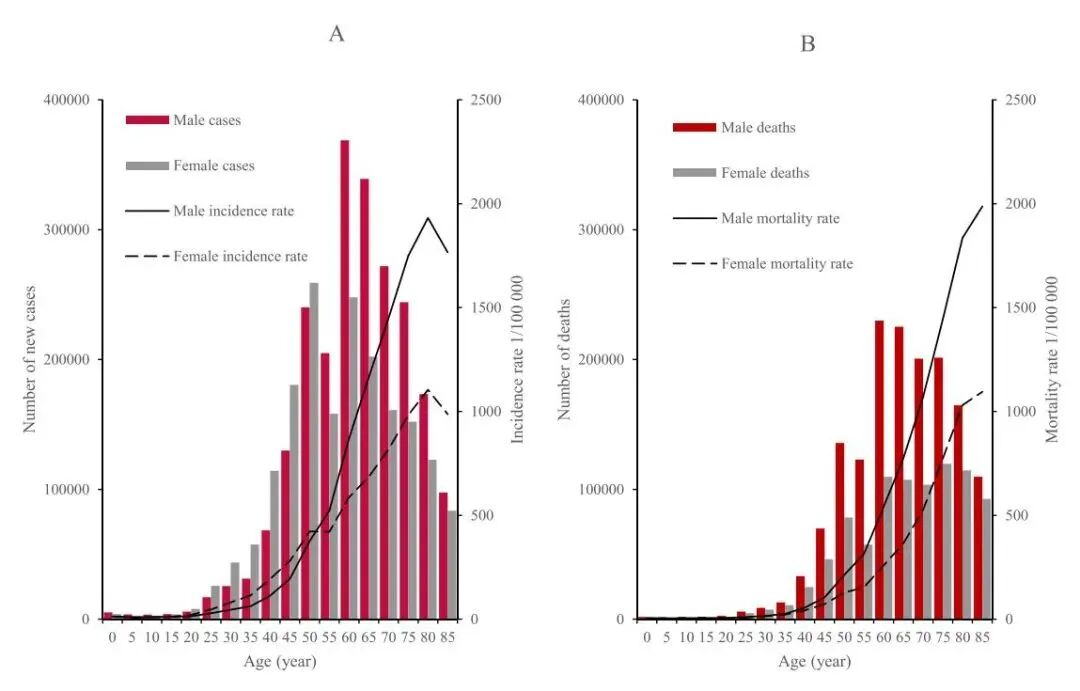
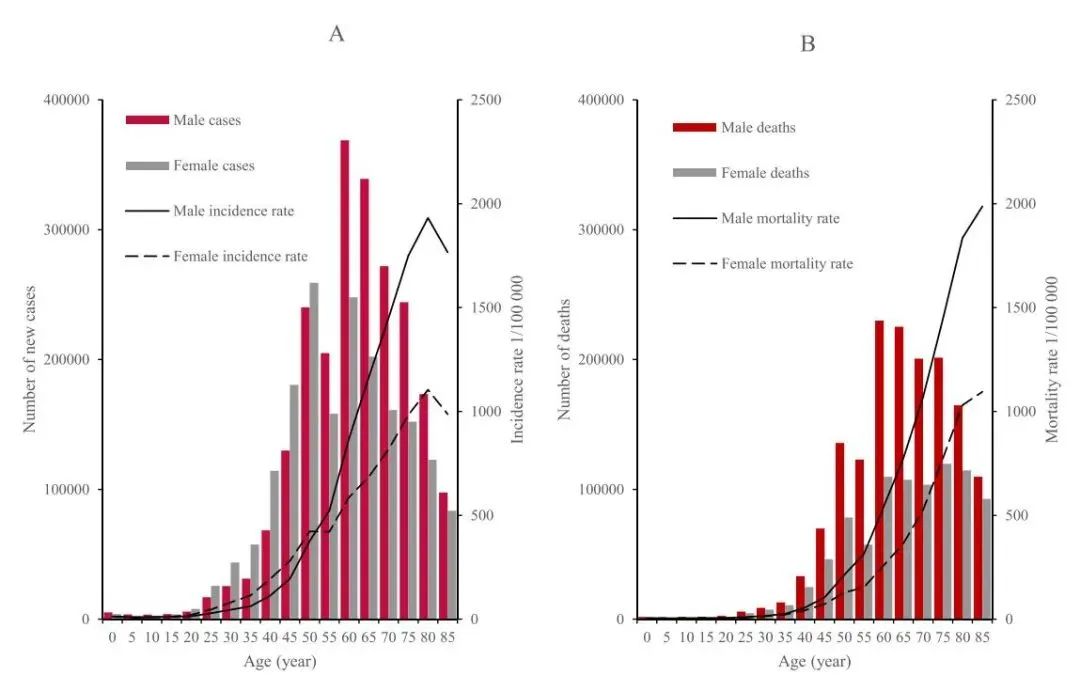
Both cancer incidence and mortality increase with age, peaking in the 80-84 age group and the 85+ age group, respectively. Lung cancer is the most common cancer among males aged 45 and older. Breast cancer and lung cancer are the most common cancers among females in the 15-59 age group and those aged 60 and above, respectively. Overall, incidence and mortality rates are higher in males than females, except in the 20-49 age group, where female incidence is higher.
From the perspective of regional differences:
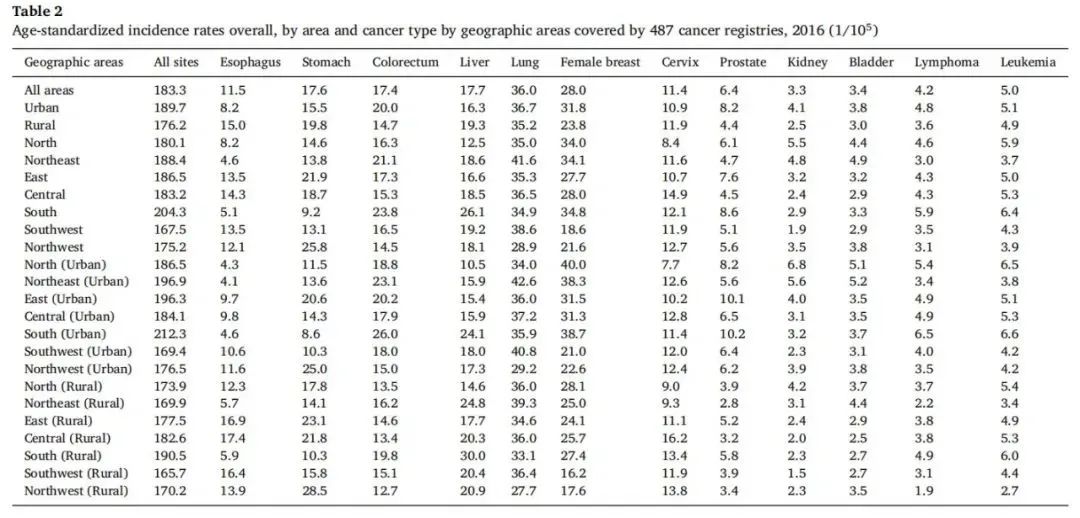
The ASIR is higher in urban areas than in rural areas (189.7 per 100,000 vs. 176.2 per 100,000). South China has the highest ASIR at 204.3 per 100,000, followed by Northeast and East China, while Southwest China has the lowest ASIR at 167.5 per 100,000.
Specifically, incidence rates for colorectal cancer, lung cancer, female breast cancer, and prostate cancer are higher in urban areas than in rural areas, while incidence rates for liver cancer and some digestive system cancers, such as esophageal and gastric cancers, are higher in rural areas.
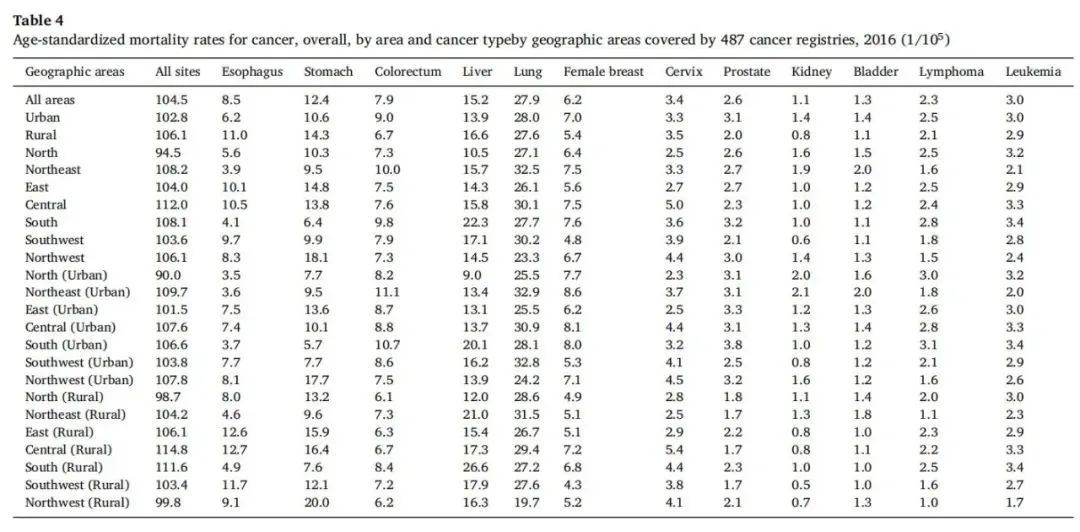
The age-standardized mortality rate (ASMR) for cancer is higher in rural areas than in urban areas (106.1 per 100,000 vs. 102.8 per 100,000). Central China has the highest cancer mortality rate at 112.0 per 100,000, followed by Northeast and South China, while North China has the lowest rate at 94.5 per 100,000.
Specifically, mortality rates for colorectal cancer, lung cancer, female breast cancer, prostate cancer, endogenous cancer, bladder cancer, lymphoma, and leukemia are higher in urban areas than in rural areas, while mortality rates for digestive tract cancers such as esophageal, gastric, and liver cancer are higher in rural areas.
Summary
The report indicates that the increasing cancer burden in China may be partly attributable to continuous population growth over the past few decades. Additionally, tobacco consumption is one of the major risk factors for several cancers, including lung, esophageal, and gastric cancers. China has the largest smoking population globally, with an estimated 350 million smokers and 740 million people exposed to secondhand smoke. Previous studies have shown that smoking accounts for over 20% of cancer deaths in China.
In Western countries, effective tobacco control has been proven to be an effective intervention for reducing cancer incidence. In contrast, only cities or regions like Beijing and Shanghai in China have implemented smoking bans in indoor public places. Furthermore, increased attention should be paid to the continuously rising incidence of lung cancer among non-smoking women, particularly in rural areas, which may be associated with indoor cooking and exposure to air pollution.
Similar to the global trend of increasing colorectal and breast cancer incidence, these two cancers are also on the rise in China. The prevalence of obesity in China increased from 3.1% to 8.1% between 2004 and 2018, which may be one of the contributing factors to the increase in colorectal and breast cancers. Therefore, promoting a healthy lifestyle is necessary.
On a positive note, the incidence and mortality rates for esophageal, gastric, and liver cancers are showing a continuous downward trend. The decline in liver cancer incidence may be related to reduced aflatoxin contamination in food, improved water quality, and hepatitis B vaccination. Meanwhile, the decline in upper gastrointestinal cancers further underscores the important role of endoscopic cancer screening.
Overall, the cancer burden in China is substantial and is projected to continue increasing over the next decade. Cancer prevention and control should not only maintain existing strategies but also increase investment in clinical cancer treatment and basic research to accelerate progress in cancer research in China and improve cancer survival rates.
 Previous:
 Back to List