



Copyright © 2025 Shenyang Dasan Pharmaceutical Technology Co., Ltd.

 Posting Date:2021-06-15
 Views:
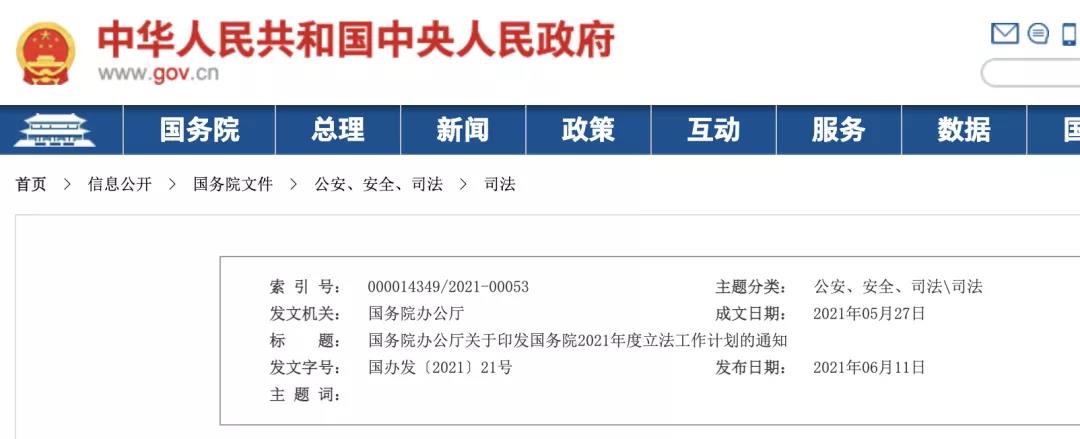
 On June 11, the General Office of the State Council issued the Notice of the General Office of the State Council on Issuing the State Council's 2021 Legislative Work Plan. The plan stated that the draft Pharmacist Law would be prepared for submission to the Standing Committee of the National People's Congress for review in 2021.
Let's review the process of the three draft versions of the Pharmacist Law for public comment:
▍First Draft for Comments
The first draft for comments was the 2017 version. A drafting expert group for the Pharmacist Law was formed, composed of relevant responsible persons or experts from the Ministry of Education, the Ministry of Human Resources and Social Security, the National Health Commission, the National Administration of Traditional Chinese Medicine, and the Health Bureau of the Logistic Support Department of the Central Military Commission. This group drafted the first version of the Pharmacist Law (Draft for Comments).
▍Second Draft for Comments
On June 17, 2020, the second draft of the Pharmacist Law was released for comments.
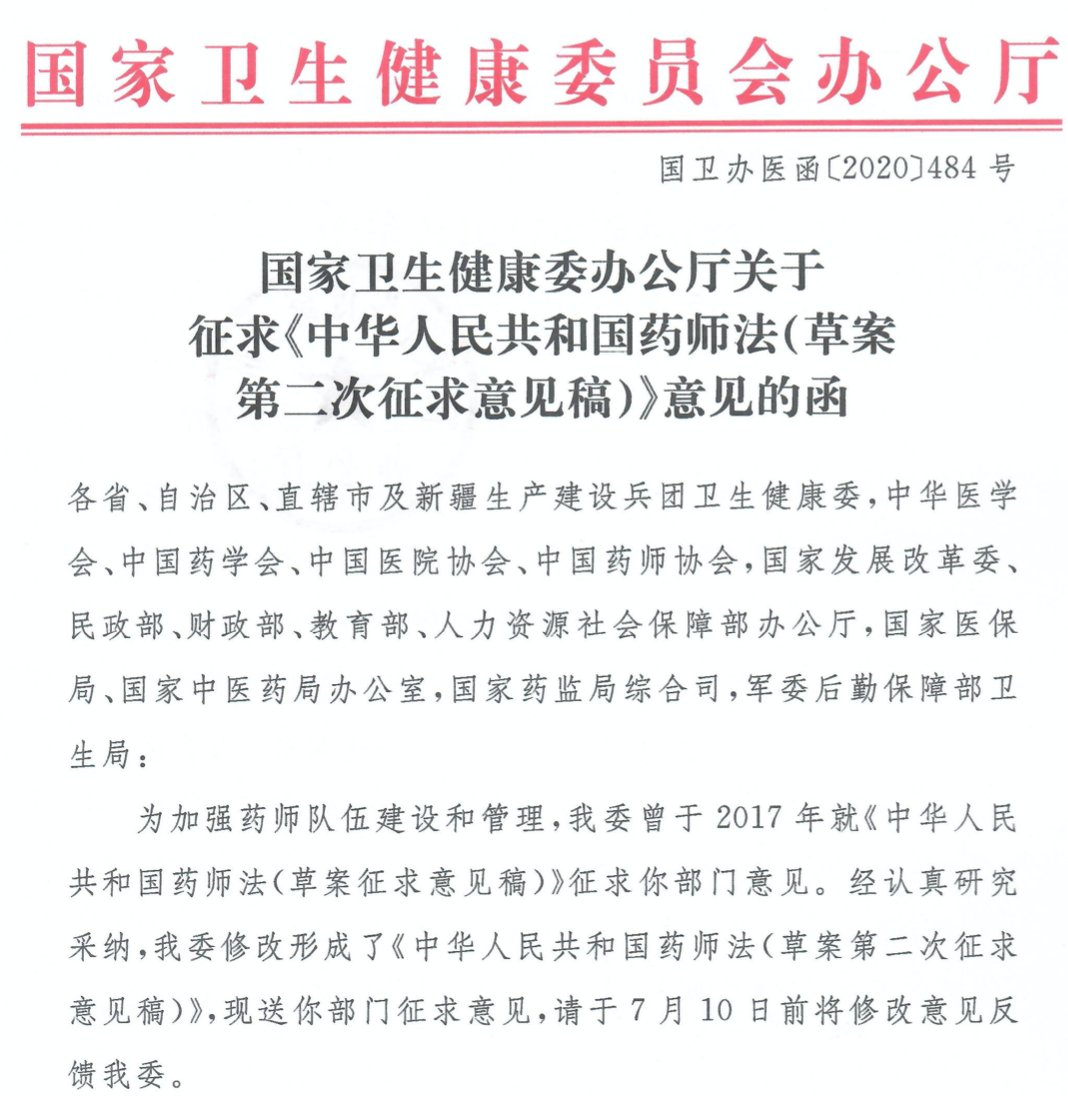
The Pharmacist Law (Second Draft for Comments) was formed after the National Health Commission officially commissioned the Law School of Tsinghua University to establish a dedicated research group in 2018.
▍Third Draft for Comments
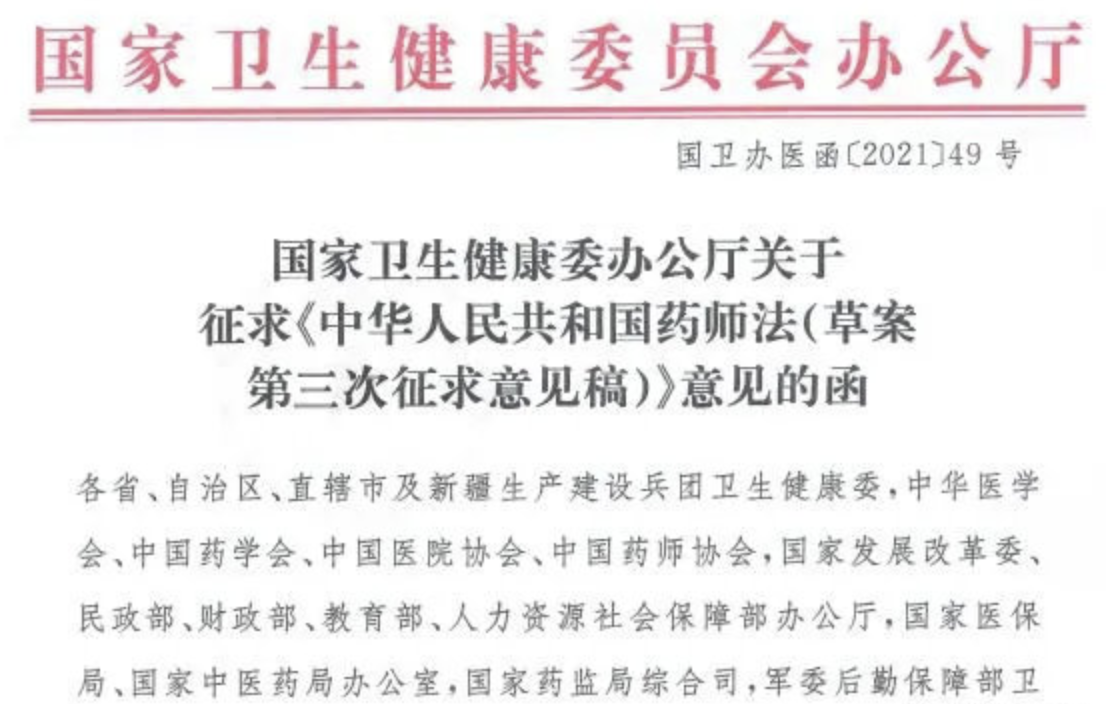
Recently, there has been much discussion about the Pharmacist Law of the People's Republic of China (Third Draft for Comments), drawing significant attention from licensed pharmacist candidates. What new policy reforms does this third draft introduce?
Main Content of the Pharmacist Law (Third Draft for Comments)
The Pharmacist Law (Third Draft for Comments) consists of six chapters and 48 articles. The main contents are as follows:
1. Clarification of the Applicable Population
Article 2 of the third draft states that the primary work units for pharmacists include medical and health institutions, drug marketing authorization holders, pharmaceutical manufacturers, pharmaceutical wholesale enterprises, and pharmaceutical retail enterprises. Furthermore, the term "pharmacist" in this Law includes licensed pharmacists and licensed assistant pharmacists.
2. Minimum Education Requirement Raised to Associate Degree
Article 11 of the third draft revises the eligibility requirements for the licensed pharmacist examination:
For Licensed Assistant Pharmacist:
1. Hold an associate degree or higher in pharmacy, traditional Chinese pharmacy, or a related field from an institution of higher education;
2. Hold a secondary vocational diploma in pharmacy, traditional Chinese pharmacy, or a related field and have worked for one year in a pharmacy or traditional Chinese pharmacy position under the guidance of a licensed pharmacist.
For Licensed Pharmacist:
1. Hold an associate degree in pharmacy, traditional Chinese pharmacy, or a related field from an institution of higher education and have worked for three years in a pharmacy or traditional Chinese pharmacy position;
2. Hold a bachelor's degree in pharmacy, traditional Chinese pharmacy, or a related field from an institution of higher education and have worked for one year in a clinical pharmacy, pharmacy, or traditional Chinese pharmacy position;
3. Hold a bachelor's degree in clinical pharmacy, or a graduate degree in pharmacy, traditional Chinese pharmacy, or a related field from an institution of higher education;4. Have obtained a Licensed Assistant Pharmacist qualification certificate and subsequently earned an associate degree or higher in clinical pharmacy, pharmacy, traditional Chinese pharmacy, or a related field from an institution of higher education, and have worked for three years in a clinical pharmacy, pharmacy, or related position.
While the previous draft required a minimum bachelor's degree for licensed pharmacist eligibility, this draft makes a concession by setting the minimum education requirement at the associate degree level. Nevertheless, it still reflects the state's stringent requirements regarding the educational qualifications for licensed pharmacist candidates.
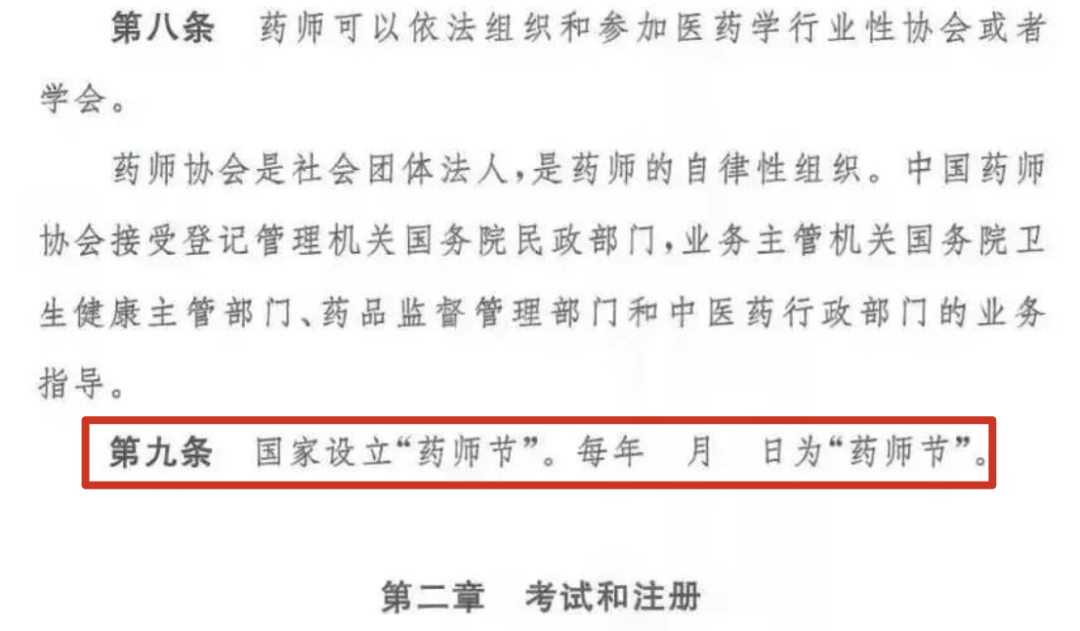
3. Establishment of "Pharmacist Day"
4. Potential Merger of the Two Pharmacist Systems
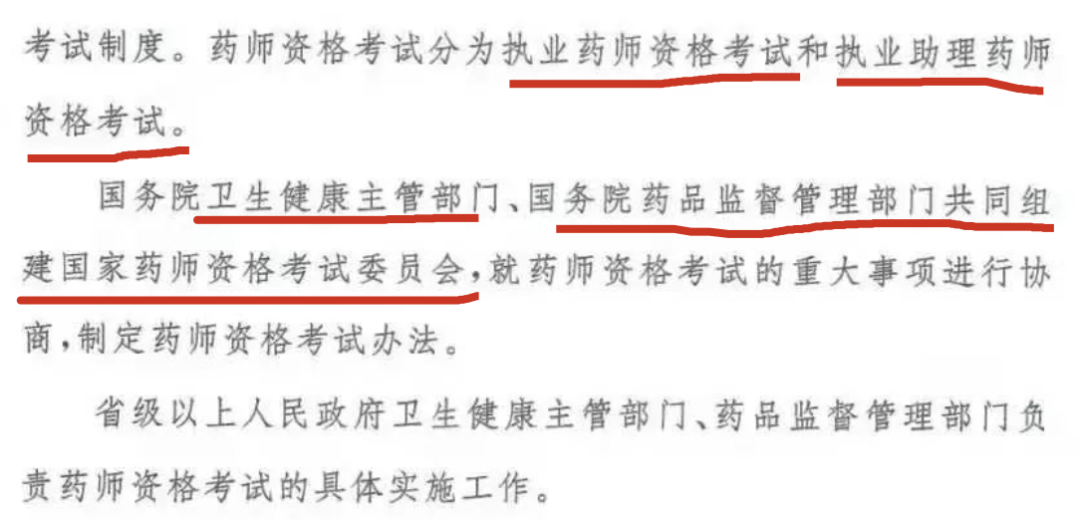
The merger of the "two pharmacist systems" (title pharmacist and licensed pharmacist) has long been a hot topic of discussion within the industry. This draft also emphasizes the principle of "unified qualification access with categorized management" for pharmacist regulation. The competent health department under the State Council and the competent drug regulatory department under the State Council will jointly organize and implement a unified qualification access system for pharmacists.
—————— The 21-Year Journey of the Pharmacist Law ——————
In fact, the legislative issues surrounding the Pharmacist Law have been brewing for many years. Foundational research on licensed pharmacist legislation began as early as 21 years ago.
In 2000, the former State Drug Administration initiated foundational research on licensed pharmacist legislation.
In 2003, the Licensed Pharmacist Law was included in the legislative plan of the Standing Committee of the National People's Congress and the State Council's legislative plan for 2003–2006. On October 15 of that year, the former State Food and Drug Administration completed the drafting of the Licensed Pharmacist Law of the People's Republic of China (Draft for Submission) and submitted it to the State Council for review.
In the second half of 2007, the former State Food and Drug Administration, together with the Legislative Affairs Office of the State Council and the Legislative Affairs Commission of the National People's Congress, actively coordinated efforts. The Licensed Pharmacist Law was once again included in the State Council's legislative plan for 2008–2012 and also in the National People's Congress legislative plan for 2008–2012.
In 2008, the former Ministry of Health commissioned the Rational Drug Use Expert Committee of the Chinese Licensed Pharmacist Association to conduct further research.
In May 2013, the Licensed Pharmacist Law was included in the State Council's third-tier legislative plan, designating the former National Health and Family Planning Commission as the lead drafting agency, with the former China Food and Drug Administration and the State Administration of Traditional Chinese Medicine providing support.
In September 2015, the General Office of the State Council issued the State Council's 2015 Legislative Work Plan, which specified the legislative title Pharmacist Law and listed it as a research project, with drafting to be organized by the former National Health and Family Planning Commission.
In May 2017, the former National Health and Family Planning Commission solicited comments on the Pharmacist Law of the People's Republic of China (Draft for Comments), recommending that relevant departments promptly remove obstacles to facilitate the early issuance of the formal law.
In November 2018, the National Health Commission issued the Opinions on Accelerating the High-Quality Development of Pharmacy Services, which emphasized strengthening the construction of the pharmacist workforce and encouraging medical institutions to establish outpatient services for rational medication consultations or medication therapy management.
In September 2019, the National Health Commission released the State Council Leading Group on Deepening the Reform of the Healthcare System Brief (Issue 73) – Positive Progress Achieved in Comprehensive Drug Process Reform, which highlighted the need to actively leverage the role of pharmacists and accelerate the legislative process of the Pharmacist Law.
In February 2020, the National Health Commission issued a notice on Strengthening Pharmaceutical Administration in Medical Institutions to Promote Rational Medication Use, requiring pharmacists and other pharmaceutical professionals to strengthen the review of prescriptions. For non-standard, inappropriate, or unusual prescriptions, they should promptly communicate with the prescribing physician and urge corrections to ensure safety and efficacy.
In June 2020, the second draft of the Pharmacist Law was released for comments.
In February 2021, the third draft of the Pharmacist Law was released for comments.
In June 2021, the Pharmacist Law was included in the State Council's 2021 Legislative Work Plan and was prepared for submission to the Standing Committee of the National People's Congress for review.
 Previous:
 Back to List