News about "Disease X" has continued to attract global attention. WHO Director-General Tedros Adhanom Ghebreyesus has issued stark warnings about the potential outbreak of Disease X, and recently, the National Disease Control and Prevention Administration of China has also responded actively to this potential threat. So, what exactly is "Disease X"? And how can we effectively respond to it?
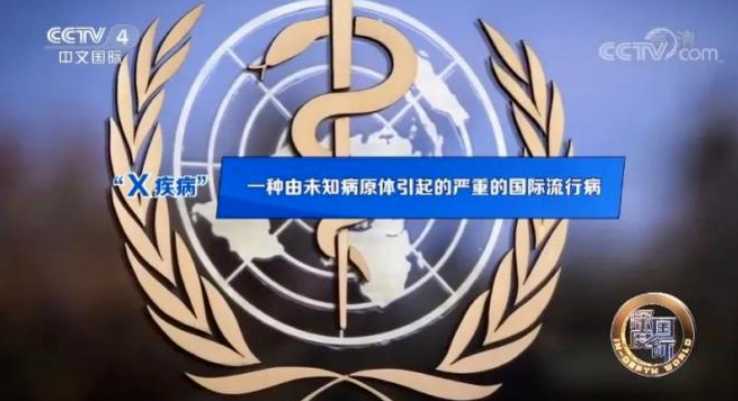
First, it is important to clarify that "Disease X" does not refer to a specific disease but is a cautionary concept representing diseases caused by emerging pathogens or known pathogens with pandemic potential. These pathogens could emerge at any time, and their mode of transmission, scope of impact, and fatality rate are highly uncertain.
On its official website, the United Nations notes that when introducing "Disease X," the "X" symbolizes the unknown and uncertainty. When a new disease first breaks out, we know very little about it. These "Disease X" pathogens often emerge suddenly, spread rapidly, and mutate easily, making them extremely difficult to monitor and detect. Therefore, they could be triggered at any time, by any source, posing a serious threat to global public health.
Regarding why this concept was introduced, we can trace back to 2018. At that time, the WHO had already adopted the term "Disease X" and listed it among the priority pathogens that could cause an outbreak or pandemic. Director-General Tedros has repeatedly emphasized in public that we are in an era of great uncertainty and that it is very likely we will face another pandemic. His warning is not alarmist but aims to draw global attention to the potential threat of Disease X.
So, which diseases might be referred to as "Disease X"? Tedros has suggested that the novel coronavirus could be the first example of Disease X. The outbreak of COVID-19 has made us deeply aware that emerging or mutating pathogens pose a significant threat to humanity. Scientists are actively exploring how to address this new challenge and hope to draw lessons from COVID-19 prevention and control to prepare for a potential future Disease X.
Facing the potential threat of Disease X, we inevitably ask: will it definitely come? The WHO states that the emergence of new pathogens and epidemics is a matter of when, not if. While the uncertainties of human activity and pathogen mutation make it impossible to predict exactly when Disease X will appear, in the long run, the possibility of an outbreak somewhere in the future does exist.
How to take scientific precautions?
On March 9, Wang Hesheng, Director of the National Disease Control and Prevention Administration, answered questions regarding Disease X. Wang stated that while the emergence of Disease X is difficult to avoid, a resulting pandemic can be prevented and managed. "We must use the certainty of preparedness to address the uncertainty of infectious disease pandemics," Wang said. He noted that China will establish and improve its legal and regulatory system, multi-channel surveillance and early warning system, emergency response plan system, scientific prevention and control system, and a system for community-based prevention and control.
How should the public respond?
It is understood that China has established the world's largest direct reporting network for infectious diseases, reducing the average reporting time from 5 days to 4 hours. At the national level, a technical system capable of rapidly identifying 300 pathogens within 72 hours has been established, and all provincial-level and 90% of municipal-level CDCs have the capacity for nucleic acid testing and virus isolation. This system enables more sensitive monitoring and early warning of infectious diseases, timelier data reporting, achieving early detection and control of infectious diseases, and reducing their impact on public life..
Due to the unknown nature of Disease X, the source of infection or transmission routes may be unclear in the early stages of an outbreak, making it relatively difficult to immediately determine the most appropriate personal protective measures..
As members of the public, we should promptly follow announcements from disease control authorities. If Disease X occurs, we should follow the relevant guidelines for personal protection to avoid early infection. In addition to developing the habit of following announcements from disease control agencies, the public should also strive to improve their immunity in daily life by maintaining a good routine, a regular diet, appropriate exercise, and reducing contact with wild animals.




 Posting Date:2024-03-15
 Views:
 Previous:
 Back to List