



Copyright © 2025 Shenyang Dasan Pharmaceutical Technology Co., Ltd.

 Posting Date:2025-03-31
 Views:
 [Definition of Mini-tablets]
Mini-tablets, also known as micro-tablets, are a type of miniature tablet. Compared to conventional oral solid dosage forms, they offer advantages such as ease of swallowing, accurate and flexible dosing, and good chemical stability. They have become a new trend in the development of pediatric drugs in recent years. Several mini-tablet formulations for children are already marketed abroad, most of which are developed by improving conventional oral solid dosage forms to obtain a dosage form suitable for the pediatric population. According to China's chemical drug registration classification, mini-tablets are currently being developed as improved new drugs.
The "Technical Guidelines for Pharmaceutical Research of Mini-Tablets (Chemical Drugs) (Trial)" issued by the Center for Drug Evaluation of the National Medical Products Administration stipulates that mini-tablets (referred to as mini-tablets) typically have a diameter of less than 3 mm and are generally multi-unit dosage forms. Mini-tablets have the advantages of being easy to swallow, accurate in dosage, and allowing flexible dose adjustment, making them suitable for patients such as children and those with swallowing difficulties. Based on clinical needs, mini-tablets can be developed as immediate-release, sustained-release, or enteric-coated mini-tablets. They can be filled into capsules or packaged in sachets or bottles, and can be equipped with counters as needed to accurately count the number of mini-tablets for administration. This dosage form has the following core features:
Precise dosing: Enables accurate dose control within the range of 0.5–4 mg.
Flexible adaptation: Can be used with dedicated dosing devices (including counting function).
Uniform morphology: Surface smoothness ≥ 0.8 μm, roundness error ≤ 5%.
Formulation types: Supports various development routes including immediate-release, sustained-release, and enteric-coated mini-tablets.
[Characteristics of Mini-tablets]
Compared to common pellets or granules, mini-tablets also have the following process advantages:
1.Precise dosing:Formed by compression, the tablet weight and size are controllable, ensuring precise dosing and minimal batch-to-batch and within-batch variation.
2.Simple process:The preparation process is similar to that of conventional tablets, simple and efficient, reducing costs.
3.Wide applicability:Requires no water, organic solvents, or heating, making it suitable for drugs that are unstable to moisture or heat.
4.Easy coating:Uniform size and smooth surface facilitate coating, saving material.

[Manufacturing Challenges]
From a tableting technology perspective, the compression of mini-tablets, like conventional tablets, depends on three aspects: granule quality, filling control, and compression control. The mass and size of mini-tablets are much smaller than those of conventional tablets, so they have higher requirements in all aspects. All tableting faces two challenges: one is the compression of large tablets with high pressure, which tests the load-bearing capacity of the equipment; the other extreme is the compression of small tablets with low pressure, which tests the motion precision of the mechanical system and the sensitivity and response speed of electrical components. Mini-tablet compression not only requires high-quality tooling but also challenges the overall performance of the tablet press.
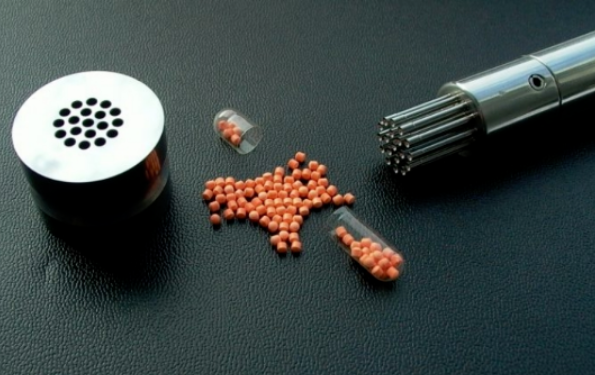
[Dosing Characteristics]
In the past, dosing was primarily based on volume measurement. This imprecise method was one of the main criticisms of mini-tablets. However, with the continuous advancement of pharmaceutical packaging technology, several drug delivery device suppliers have launched precise dosing devices for mini-tablets.
The MINITABLET dispenser launched by Phillips-Medisize is a dosing device specifically designed for mini-tablets.The MINITABLET dispenser not only helps patients and caregivers accurately obtain the exact number of mini-tablets needed for the dose but also ensures that the tablets do not come into contact with the external environment before counting, effectively reducing the risk of contamination.
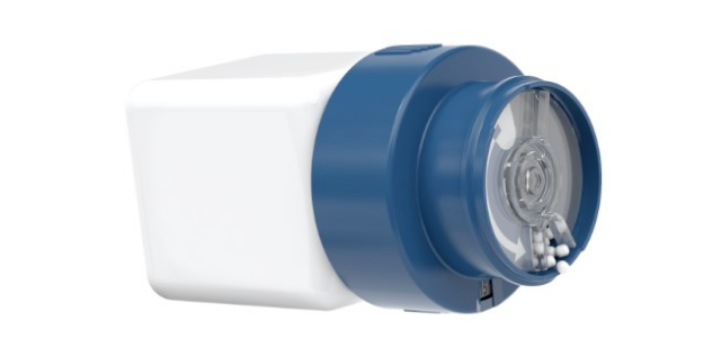
(MINITABLET Dispenser)
[Future Outlook]
As an innovative pediatric drug delivery system, mini-tablets combine the stability advantages of solid dosage forms with the precise dosing characteristics of liquid formulations. Their miniaturized design significantly reduces the risk of swallowing difficulties in young children while supporting dose adjustment for personalized treatment plans, demonstrating broad applicability across the entire pediatric age range. Under the current drug regulatory framework, the development of mini-tablets as improved new drugs should be guided by the "Chemical Drug Registration Classification and Application Document Requirements" and the "Technical Guidelines for Clinical Trials of Improved New Drugs," with a focus on demonstrating the clinical value of the formulation improvement.
In terms of development pathway planning, a “regulatory-clinical-engineering” integrated strategy is recommended. First, establish pre-communication with the drug regulatory agency to clarify whether the improvement direction centered on enhancing pediatric patient compliance meets the principles of clinical necessity. Second, build a multi-dimensional R&D system that deeply integrates the physiological characteristics of children during their growth and development (such as gastrointestinal function, swallowing coordination) with pathological data (such as disease progression, drug metabolism differences) to optimize the dosing regimen through formulation science. Finally, establish a full-lifecycle quality control system covering key aspects such as raw material characterization, process parameter optimization, and stability studies to ensure the uniformity and reliability of mini-tablets during industrialization.
With the continuous improvement of global pediatric drug regulatory frameworks (such as updates to the US FDA’s Pediatric Drug Development Incentive Policies and the EU Pediatric Regulation) and breakthroughs in micro/nano manufacturing technology, mini-tablets are overcoming the precision limitations of traditional production processes. In the future, through the integration of intelligent designs such as taste-masking technology and targeted release systems, mini-tablets are expected to address industry pain points such as poor dose splitting accuracy and low palatability in pediatric drugs. They hold broad clinical application prospects in the context of precision medicine, bringing revolutionary changes to the field of pediatric therapeutics.
 Previous:
 Back to List