



Copyright © 2025 Shenyang Dasan Pharmaceutical Technology Co., Ltd.

 Posting Date:2025-04-14
 Views:
Interview Highlights
Established in 1996, DASAN Pharmaceutical Korea is a key player in the Korean pharmaceutical industry. In 2001, the company successfully commercialized Drug Delivery Systems (DDS) and developed advanced technologies such as fluidized bed coating, gradually evolving into a CDMO. Centered on advanced drug formulation technology, it provides formulation technology support for cardiovascular disease-specific drugs to over 50 companies in Korea. Since changing its name from Dasan Medichem to Dasan Pharmaceutical in 2017, the company has also established a second pharmaceutical formulation plant, marking an expansion of its business from APIs to finished formulations, becoming a comprehensive enterprise offering full-scale pharmaceutical solutions.
With 20 years of R&D experience in micro-particle coating, DASAN has accumulated advanced DDS technology, which it applies to the development of treatments for cardiovascular diseases and depression. Currently, the company's products are exported to over 30 countries, including the US, Japan, and Mexico, in forms such as capsules, tablets, orally disintegrating tablets, and granules, meeting global demand for high-quality pharmaceutical formulations. Besides directly exporting finished and semi-finished products, DASAN also assists overseas partners in custom-developing products suitable for local markets through technology transfer and licensing, further expanding its international influence. The company is currently committed to introducing high-quality Chinese APIs and intermediates into the Korean market and integrating these resources through its global network for international distribution, optimizing and upgrading the global pharmaceutical supply chain.
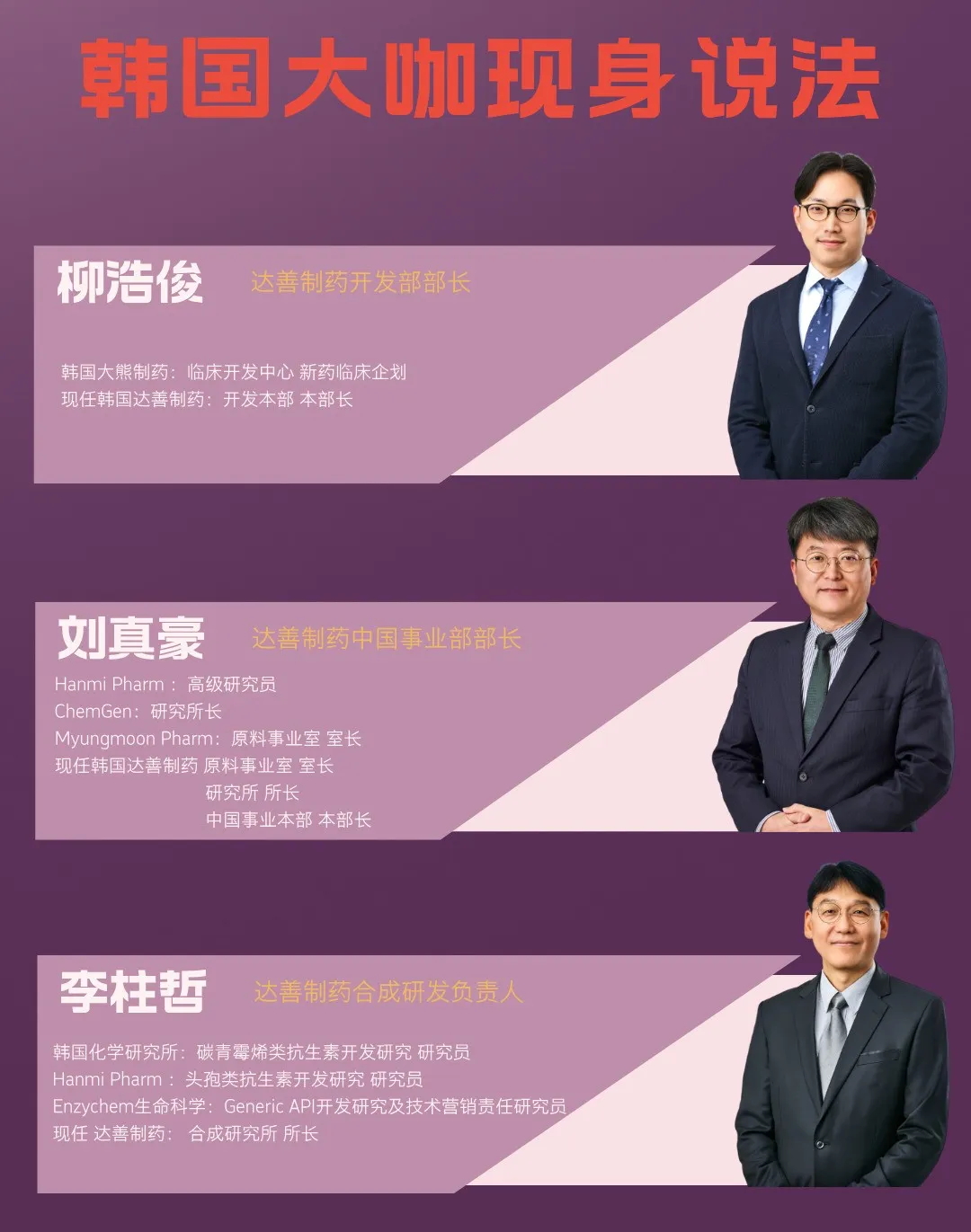
The company also operates two formulation plants in Asan, Chungcheongnam-do. Although it does not have dedicated API manufacturing facilities, it can legally obtain API licenses and conduct related businesses through KDMF registration. Currently, DASAN's R&D activities in the API field are fully underway, covering raw materials, polymorphs, and salt modifications, with Director Lee Joo-chul specifically responsible for API R&D and registration.
In terms of global market presence, DASAN is actively pursuing export plans to Japan, leveraging its strengths in pharmaceutical formulation and its expertise and compliance capabilities in APIs to expand into broader international markets.
The Korean API market is highly dependent on imports, especially from China and India. However, Korean domestic companies also actively produce specific high-quality APIs and export them to international markets like Japan. Despite its relatively small population, Korea has high pharmaceutical consumption, and product quality is comparable to that of the US, Europe, and Japan, reflecting Korea's technological prowess in the pharmaceutical field.
Korea possesses advanced drug development technologies and is willing to engage in deep exchanges and collaborations with Chinese pharmaceutical companies in the API sector, particularly in the area of improved new drugs. Due to differing policy environments between the two countries, Korean companies may conduct R&D modifications to expedite market entry. An emerging cooperation model involves intermediate development in China, followed by API development in Korea, and finally, global sales of the final products. This cooperative model not only integrates the pharmaceutical strengths of China and Korea but also holds the potential to drive mutual development in the API industry through technological exchange and collaboration.
In 2023, the Korean pharmaceutical market reached KRW 31.5 trillion, a 5.3% increase year-on-year. API production performance was KRW 3.8 trillion, an 11.5% increase year-on-year, and grew by 52.5% over the past five years, highlighting Korea's strong growth momentum in API production. Although Korea's dependence on foreign APIs is relatively high at about 25.4%, the government is actively promoting domestic productivity improvements to reduce import reliance.
As a member of PIC/S, Korea has a well-developed GMP certification system, which ensures the high quality of both APIs and finished drugs and facilitates their entry into developed markets like the US, Europe, and Japan. Additionally, the biopharmaceutical sector is growing rapidly, and the CDMO industry is expanding in tandem with market demand.
The strengths of the Korean pharmaceutical market are primarily reflected in policy integration and product differentiation. Its pharmaceutical policies judiciously incorporate best practices from China and Japan, creating a regulatory framework conducive to global market expansion, enabling Korean drugs to more easily meet international standards and gain a competitive advantage when entering global markets. Concurrently, Korean companies tend to develop combination dosage forms, which incorporate multiple active ingredients into a single product. This not only enhances patient convenience but also increases market competitiveness through unique product positioning. This strategic product differentiation, combined with a flexible policy environment, allows Korea to play a significant role in the current global pharmaceutical market.
Korea boasts an advanced market environment, while China possesses a highly competitive raw material market. For Chinese API companies, engaging in technical exchanges with Korean API companies and conducting DMF registration in Korea can effectively circumvent Korea's strict pharmaceutical licensing barriers, facilitating smooth entry into the Korean market and using it as a springboard for further global expansion.
Given that China currently does not hold GMP certificates, directly entering the Korean market presents significant challenges. A recommended business model involves Chinese small and medium-sized API enterprises collaborating with Korean API companies, exporting intermediate-stage products to Korea, where Korean specialized synthesis companies then manufacture the APIs, completing the registration and market launch process in Korea. This cooperation model not only helps Chinese companies overcome market access barriers but also leverages Korea's advanced technology and market experience to enhance the international competitiveness of their products.
Although China and Korea are geographically close, there are significant differences in their API registration and import/export policies. China's API registration policies tend to favor diversity in the synthesis stage, while Korea allows import/export registration through refining processes. Small and medium-sized Chinese API companies face challenges in entering the Korean market due to limited understanding of Korean policies. In this context, Shenyang DASAN Pharmaceutical Technology Co., Ltd. hopes to play a crucial bridging role. It can introduce Korean APIs and products into China and also promote high-quality Chinese APIs to the Korean market, facilitating exchanges between China and Korea in the API sector.
Ilaprazole Intermediate: After intermediate development in China, API synthesis was carried out in Korea, followed by DMF registration to advance finished drug development.
Deoxycholic Acid: Shanghai Gaozhun Pharmaceutical Technology Co., Ltd. handled Phase 1 development, followed by DASAN Korea completing API development and DMF registration. The registration for the related formulation has now been completed.
Tegoprazan (patent-avoiding API development): A new drug project for DASAN Korea. Phase 1 was completed in China, followed by DASAN Korea conducting API development and DMF registration. Finished drug development is complete, and marketing authorization is being applied for.
Erdosteine: A popular cold medicine in Korea. Its API technology was developed by DASAN Korea and transferred to Shanghai Gaozhun. The API is produced in China, exported to Korea, and after DMF registration, entered the market for sales.
These cases demonstrate that through complementary advantages—where Chinese companies leverage cost and technological strengths in raw material and intermediate development, and Korean companies utilize their expertise in registration and market access—both sides have jointly advanced the internationalization of pharmaceuticals. Shenyang DASAN Pharmaceutical Technology Co., Ltd., acting as a bridge, not only facilitates technical exchanges and business cooperation between Chinese and Korean companies but also provides a platform for Chinese SMEs to participate in international collaboration, creating more possibilities.
There is significant potential for cooperation in new drug development between China and Korea, but Chinese SMEs face challenges due to insufficient information about Korean new drug R&D. The key for Chinese companies is to understand the dynamics of new drug development in Korea to cooperate with Korean companies at the right time, especially by intervening in the early stages of sample or API development, thereby gaining opportunities for exclusive sales rights for new drugs in the Korean market. However, there are certain risks in the cooperation process: On one hand, the significant differences in API regulations between China and Korea can lead to misunderstandings; on the other hand, Korean companies may contact multiple Chinese companies when selecting partners, leading to information distortion. Therefore, Chinese companies should seek collaboration with professional firms to accurately understand Korean market demands and policies, avoiding misunderstandings and wrong decisions. Additionally, there are differences between China and Korea in new drug development cycles and policy implementation speeds. Chinese companies need to pay attention to these differences and communicate through professional institutions to ensure smooth cooperation.
The application of AI in the biopharmaceutical field in Korea shows a polarized situation. Some companies actively adopt AI technology, but a large number of enterprises have not yet utilized AI, primarily due to cost constraints and the general nature of new drug development. The frequency of AI usage is expected to increase in the future. Although DASAN Korea has not yet fully implemented AI, it is actively exploring its application in R&D and believes that AI usage will continue to expand in Korea and globally.
 Previous:
 Back to List